
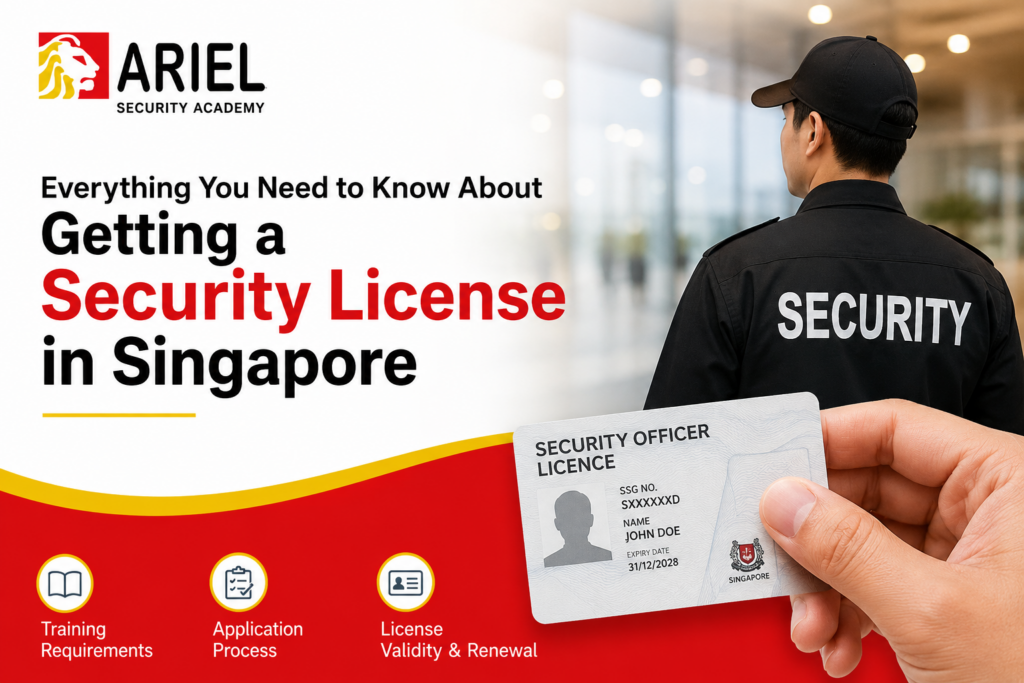
Singapore’s private security industry plays a major role in protecting commercial buildings, residential developments, retail spaces, events, and public facilities. As demand for trained officers continues to grow, many people are now searching for clear answers about how to get a security license in Singapore and what the process actually involves.
For newcomers, the licensing system can feel confusing at first. There are training requirements, background checks, licence categories, and application procedures that must all be completed correctly. The good news is that the process is straightforward once you understand each step.
This guide explains everything you need to know about obtaining a security licence in Singapore, including eligibility requirements, training courses, application procedures, career opportunities, and important updates applicants should understand before entering the industry.
For individuals looking for structured security training in Singapore, Ariel Security Academy provides WSQ security courses designed to help aspiring officers meet licensing requirements and develop practical industry knowledge.
Why Security Licensing Matters in Singapore
Singapore maintains strict standards within the security industry to ensure professionalism, safety, and public trust. Security officers are often responsible for handling sensitive situations, monitoring premises, controlling access points, and responding to emergencies. Because of these responsibilities, proper licensing is mandatory.
The licensing framework is regulated by the Singapore Police Force through the Police Licensing and Regulatory Department. Anyone who wishes to work legally as a security officer must hold a valid security licence before beginning employment.
This system helps ensure that officers are:
- Properly trained
- Aware of legal responsibilities
- Fit to work in security environments
- Able to respond professionally during incidents
Without a valid licence, individuals cannot legally perform security duties in Singapore.
Understanding the Different Types of Security Roles
Many people assume all security jobs are identical, but the industry includes several specialised roles. Understanding these career paths helps applicants choose suitable training and long term goals.
Security Officer
This is the most common entry level role. Duties may include patrolling premises, managing visitor access, conducting checks, and responding to incidents.
Senior Security Officer
Senior officers usually take on supervisory responsibilities and coordinate larger operations within buildings or facilities.
Chief Security Officer
These professionals oversee teams, manage deployment schedules, handle reporting procedures, and support operational management.
Event Security Personnel
Event security officers work at concerts, conferences, exhibitions, and large gatherings where crowd control and public safety are important.
Commercial and Industrial Security
Some officers specialise in protecting warehouses, factories, logistics centres, or commercial buildings with more advanced operational procedures.
Each pathway may require additional certifications and experience over time.
How to Get Security License in Singapore
One of the most common online searches is “how to get security license in Singapore,” especially among individuals exploring career changes or entry level opportunities.
The process generally involves five main stages.
Step 1: Meet the Basic Eligibility Requirements
Before applying, candidates must satisfy several conditions set by Singapore authorities.
Applicants generally need to:
- Be at least 18 years old
- Be a Singapore citizen, Permanent Resident, or eligible work pass holder
- Have a clean criminal record
- Be medically fit for security work
- Complete the required WSQ security training modules
Language proficiency is also important because officers must communicate effectively with the public, colleagues, and emergency services.
Step 2: Complete Required Security Training Courses
Training is one of the most important parts of obtaining a licence.
Singapore uses the Workforce Skills Qualifications framework, commonly known as WSQ, for security industry training. Candidates must complete mandatory modules before applying for a licence.
Some foundational courses include:
Provide Guard and Patrol Services
This module teaches officers how to patrol premises, monitor suspicious activity, and maintain site security.
Handle Security Incidents and Services
Candidates learn incident response procedures, reporting methods, and emergency handling techniques.
Recognise Terrorist Threats
This module focuses on identifying suspicious behaviour and responding appropriately to potential threats.
Provide Customer Service
Modern security work often involves public interaction, so communication and professionalism are essential skills.
Training providers such as Ariel Security Academy offer structured programmes that help candidates complete these requirements efficiently.
Step 3: Apply for a Security Licence
Once training is completed, applicants can proceed with the licence application process.
Applications are typically submitted through the appropriate Singapore government licensing portal. Supporting documents may include:
- Identification documents
- Training certifications
- Employment related records
- Passport style photographs
- Background screening information
Authorities will then review the application and conduct necessary checks before approval.
Processing times may vary depending on documentation accuracy and background verification requirements.
Step 4: Secure Employment with a Licensed Security Agency
After obtaining a licence, officers usually work under licensed security agencies operating in Singapore.
Security agencies deploy officers to various sites, including:
- Shopping centres
- Office towers
- Condominiums
- Hotels
- Warehouses
- Healthcare facilities
- Educational institutions
Employers may also provide additional site specific training before deployment.
Step 5: Continue Skills Development
The security industry evolves continuously due to changing technology, operational requirements, and safety expectations.
Many officers pursue advanced certifications to improve career progression opportunities. Additional training may include:
- CCTV monitoring
- Access control systems
- Threat assessment
- Incident investigation
- Supervisory management
- Emergency response coordination
Continuous learning often improves employability and salary potential.
How Long Does It Take to Get a Security Licence?
The timeline depends largely on training schedules and application processing speed.
In many cases, applicants can complete foundational training within several weeks. Licence processing may then take additional time depending on background checks and document verification.
Candidates who prepare documents early and complete training efficiently often experience smoother approval timelines.
What Skills Make a Good Security Officer?
Technical training is important, but employers also value strong personal qualities.
Successful security officers often demonstrate:
Strong Observation Skills
Officers must notice unusual activity, safety hazards, and behavioural changes quickly.
Calm Decision Making
Security environments sometimes involve stressful situations that require clear thinking.
Professional Communication
Good communication helps officers manage visitors, resolve disputes, and coordinate during emergencies.
Reliability
Punctuality and professionalism are highly valued in security operations.
Physical Readiness
Some roles require extended standing, patrol duties, and fast emergency response.
These soft skills often influence career growth just as much as formal qualifications.
Career Opportunities in Singapore’s Security Industry
Singapore’s security sector offers stable employment opportunities across multiple industries.
As urban infrastructure expands and security awareness increases, trained officers remain in demand for both public and private sector operations.
Career growth may include:
- Senior officer positions
- Operations supervision
- Security management
- Corporate security coordination
- Facility protection planning
- Risk assessment support
Some professionals also transition into specialised areas such as airport security, event management security, or integrated surveillance operations.
Common Mistakes Applicants Should Avoid
Many first time applicants delay their licensing process because of avoidable mistakes.
Incomplete Documentation
Missing certificates or inaccurate forms can slow approvals significantly.
Choosing Unaccredited Training Providers
Candidates should ensure training is conducted through recognised providers that meet Singapore WSQ standards.
Ignoring Licence Renewal Requirements
Security licences require ongoing compliance and renewal procedures. Missing renewal deadlines may affect employment eligibility.
Poor Understanding of Job Responsibilities
Security work involves more than simply monitoring entrances. Applicants should understand the professional expectations involved before entering the industry.
Technology Is Changing Modern Security Work
Security operations in Singapore have evolved considerably in recent years.
Today’s officers may work alongside:
- AI assisted surveillance systems
- Digital reporting tools
- Smart access control technology
- Facial recognition systems
- Integrated building monitoring platforms
Because of these advancements, training providers increasingly focus on practical digital literacy and operational adaptability.
Professionals who remain updated with technology trends often gain stronger career opportunities within the industry.
Why Proper Training Matters Before Entering the Industry
Training does more than fulfil licensing requirements. It prepares officers for real world responsibilities that affect public safety daily.
Well trained officers are generally better equipped to:
- Handle emergencies calmly
- Communicate effectively with the public
- Identify suspicious activity
- Follow legal and operational procedures
- Maintain professional conduct under pressure
This is why choosing a reputable training institution is an important part of starting a security career.
Ariel Security Academy is recognised in Singapore for providing WSQ aligned security training designed to support aspiring officers at different stages of their careers.
The Future of Security Careers in Singapore
Singapore continues investing heavily in infrastructure, technology, hospitality, transport, and large scale commercial developments. All these sectors require dependable security operations.
Industry demand is also shifting toward officers who possess stronger technical understanding, communication skills, and professional training.
As a result, licensed officers with updated certifications and practical experience are likely to remain valuable within the workforce for years ahead.
For individuals seeking stable employment with long term progression opportunities, the security sector continues to offer promising pathways.
Frequently Asked Questions About Security Licences in Singapore
Who issues security licences in Singapore?
Security licences are regulated by the Singapore Police Force through the Police Licensing and Regulatory Department.
Can foreigners apply for a security licence in Singapore?
Eligibility depends on work pass requirements and government regulations. Applicants should verify current employment eligibility before applying.
Is security training compulsory before applying for a licence?
Yes. Candidates must complete the required WSQ security modules before applying for a security licence.
How much does security training cost in Singapore?
Training fees vary depending on the course provider and funding eligibility. Some Singapore residents may qualify for government supported subsidies.
How long is a security licence valid?
Licence validity periods may vary based on regulatory requirements and renewal conditions.
Can I work immediately after training?
Applicants generally need licence approval before officially performing security duties.
Are there age limits for security officers?
Applicants usually need to be at least 18 years old, though there is no strict upper age barrier if candidates remain medically fit.
Is security work physically demanding?
Some roles involve standing, walking patrols, and handling emergencies, although duties differ depending on deployment sites.
Where can I complete recognised security training in Singapore?
Recognised providers such as Ariel Security Academy offer WSQ security courses that support licensing requirements and career preparation.
Getting a security licence in Singapore can open the door to a stable and professional career path with strong long term demand. With the right training, proper licensing, and continuous skills development, aspiring officers can build rewarding opportunities within one of Singapore’s essential industries. Explore professional training pathways today through Ariel Security Academy and take the first step towards a recognised security career in Singapore.